Networking at Startup Conferences — Part II: What to Do DURING the Event
How I Met a Future Substack Co-Founder

In my previous post, I covered how to prepare for networking at startup conferences. Now let’s talk about what actually happens on the ground.

Slush 2018. Slush in Helsinki is a major startup conference in Europe.
After 20+ years and hundreds of events across Europe, the US, and Asia, here are a few lessons I learned the hard (long) way.
Offer value
The core principle of effective networking is simple: offer value. Think first about what you can offer, not what you can get. This builds relationships.
One of my earliest networking moments made this real for me. At one tech event, I noticed someone struggling with internet access. I offered to help with no hidden agenda. That small gesture started a conversation, and we stayed in touch. Years later, he became a co-founder of Substack, now home to my own writing.
The lesson: You never know how you could cooperate in the future, who people will become or who they could introduce you to. People remember how useful, insightful, and actually also fun you were.
Be Bold: The 1-Second Rule
Use a 1-second rule: when you see an opportunity, move. Hesitation costs you rare encounters.
At London Tech Week, NVIDIA CEO Jensen Huang appeared in a fireside chat with UK Prime Minister Keir Starmer. Top speakers are hard to reach — they enter privately and leave fast. A friend of mine bumped into Huang and boldly pitched his idea on the spot. It worked because he was prepared.
Preparation × boldness = opportunity.
A few years back, at Slush — the Helsinki startup conference drawing around 10,000 attendees and 2,500 investors — I spotted a Sequoia Capital partner finishing a meeting in the investors’ area. I walked over, introduced myself, and pitched a startup I’d invested in. I recognized him and knew that his portfolio aligned with what I had to say. My background knowledge made the interaction relevant. (Check the 2025 Forbes Midas List if you want to check out the top VCs.)
Your targets will differ — investors, founders, partners/clients, mentors. The point is: be bold, but not pushy. Read the room and the other person; context matters.
Mindset & Energy: Assume People Want to Connect
A serial entrepreneur I spoke with recently — a former software developer who became a CTO, then a CEO — told me networking is now second nature. He’s done thousands of selfies with new contacts, shared immediately via LinkedIn or WhatsApp. His top tip: “Assume everybody wants to meet new people.”
Instead of bracing for rejection, you start from abundance. Technical people can be exceptional networkers when motivated — they “figure out the math” and just get it done. If you’re reading this, you can too.
A few mindset principles that help:
Keep a relaxed, positive, non-transactional vibe
Assume people are open to connection
Stay genuine, humble, and curious
Energy management matters just as much. Full conference days are marathons. Eat, drink water, rest, and take breaks. Know when to finish (or even skip) the late-night party, as it could wreck your next morning and your whole day.
Spotting the Right People
You can’t meet everyone. Aim for 20 quality conversations per day.
Book a few meetings in advance via the conference app and warm intros, then leave room for serendipity.
Get into the physical space of your target group.
There could be lounges for investors, founders, speakers, executives, VIPs, and sponsors that you could access via your ticket or connections. I have taken startup founders into the investor lounge. I have been helped similarly as well. Choose specific side events — breakfasts, dinners, and small gatherings — that matter for you and your targeted contacts. Starting to speak to anybody at such smaller, pre-selected settings gives you a better chance for a match.

Investors dinner & party, Web Summit 2019 in Lisbon
Often great connection magic happens at dinners and parties where people are more likely to explore each other’s personalities and bond over shared hobbies and stories told.
At Slush, I once wandered into a Korean networking event and met dozens of startups and investors I’d never have found otherwise. Smaller rooms change the dynamic. It is much easier to speak to people. Smaller rooms are cozier and conversations tend to be more relaxed and deeper.
Use visual signals:
Investors: blazers or Patagonia vests
Bankers/lawyers: suits
Founders: casual wear (though this is evolving)
Check badges quickly, then verify on the app or online. Pro tip: some VIPs skip badges to avoid pitches, but their wristband color offers a clue.
Positioning.
Sit next to preferred contacts at talks or meals. Coffee lines are underrated conversation starters. Attend sessions selectively — your main goal is to make connections in real life.
If you attend a talk, post insights live and tag speakers. They might notice and repost.
Use messaging apps
Networking now blends online and offline. As discussed in a previous post, announce your attendance on social media beforehand to trigger both planned and spontaneous meetings. You could be invited to a group, usually nowadays in WhatsApp but could be also via FB Messenger, Signal, Discord, LinkedIn etc. I assume this differs by region — for example, a go-to app in China could be WeChat.
Messaging groups can be run by active networkers or even conference organizers; e.g., Web Summit encourages you to join tens of official WhatsApp groups depending on your ticket type and your own preferences.
Physical Presence: Building Rapport Naturally
Done respectfully, physical presence and touch deepen connection. One of the best connectors I know works a room by patting shoulders, smiling, cracking jokes, and making generous introductions. People gravitate toward him. Hanging out with “superconnectors” is the best — they bridge you to people you wouldn’t reach on your own.
Common gestures, context-dependent:
Firm handshake with eye contact
Fist bump or high-five
Light touch on the arm for emphasis or empathy
Shoulder pat (more casual, friend-style)
Cheek kiss or hug (read the situation)
Hand on the back when navigating a crowd
Always read cues. Culture and consent matter.
Stand Out
Visibility creates networking opportunities. Speaking at a conference is ideal but rarely available.
Sometimes it is possible to ask a question. Prepare your question during the talk or even before, and position yourself in the front rows. A question gets you noticed by speakers and other attendees alike.
Dress distinctively. Mike Butcher (ex-TechCrunch editor) and Jensen Huang are instantly recognizable partly because of their consistent personal style - a leather jacket.
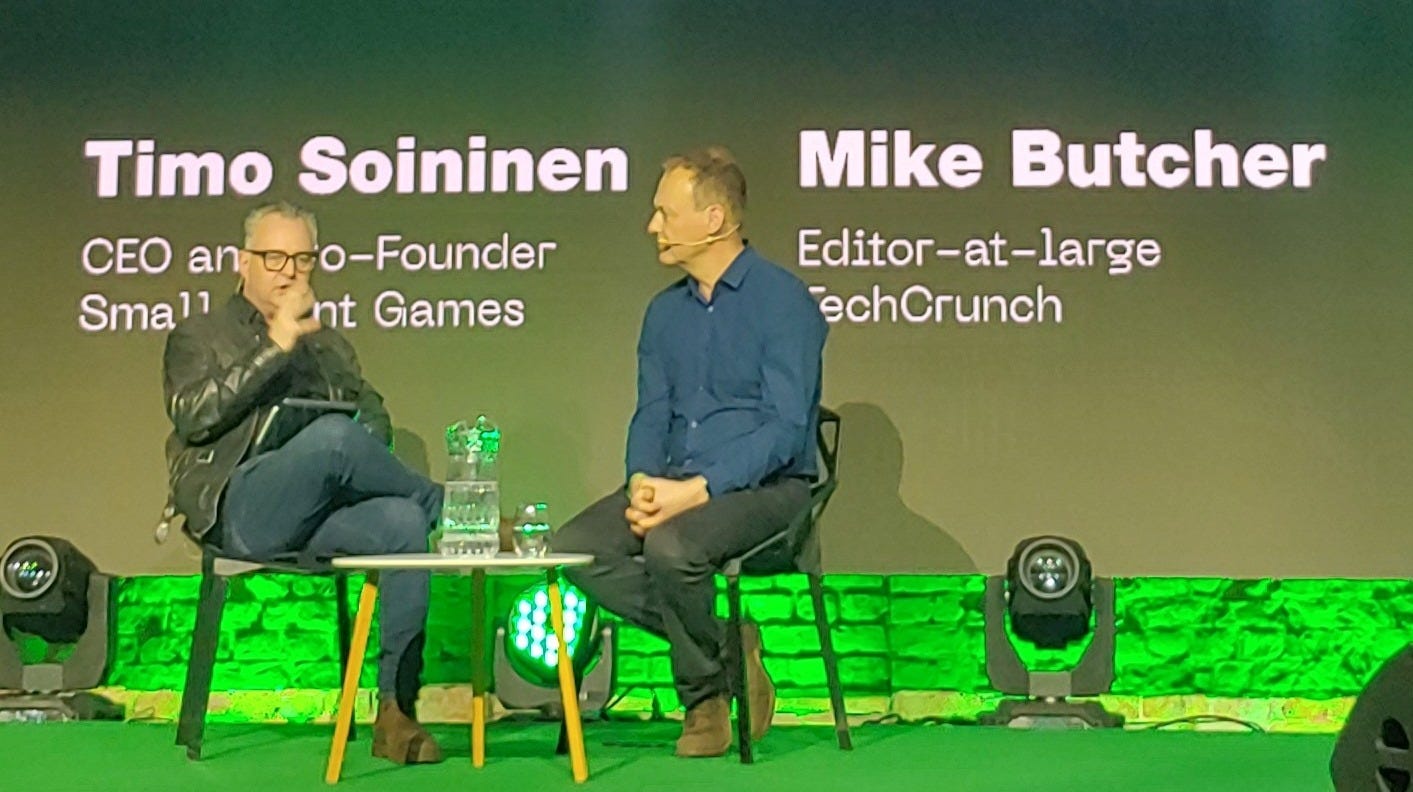
A journalist Mike Butcher wears his leather jacket at TechChill 2020 in Riga, Latvia.
Take the Photo
Photos anchor memory and make follow-up natural. Share them right away or include them in post-event highlights. It keeps relationships warm without extra effort.
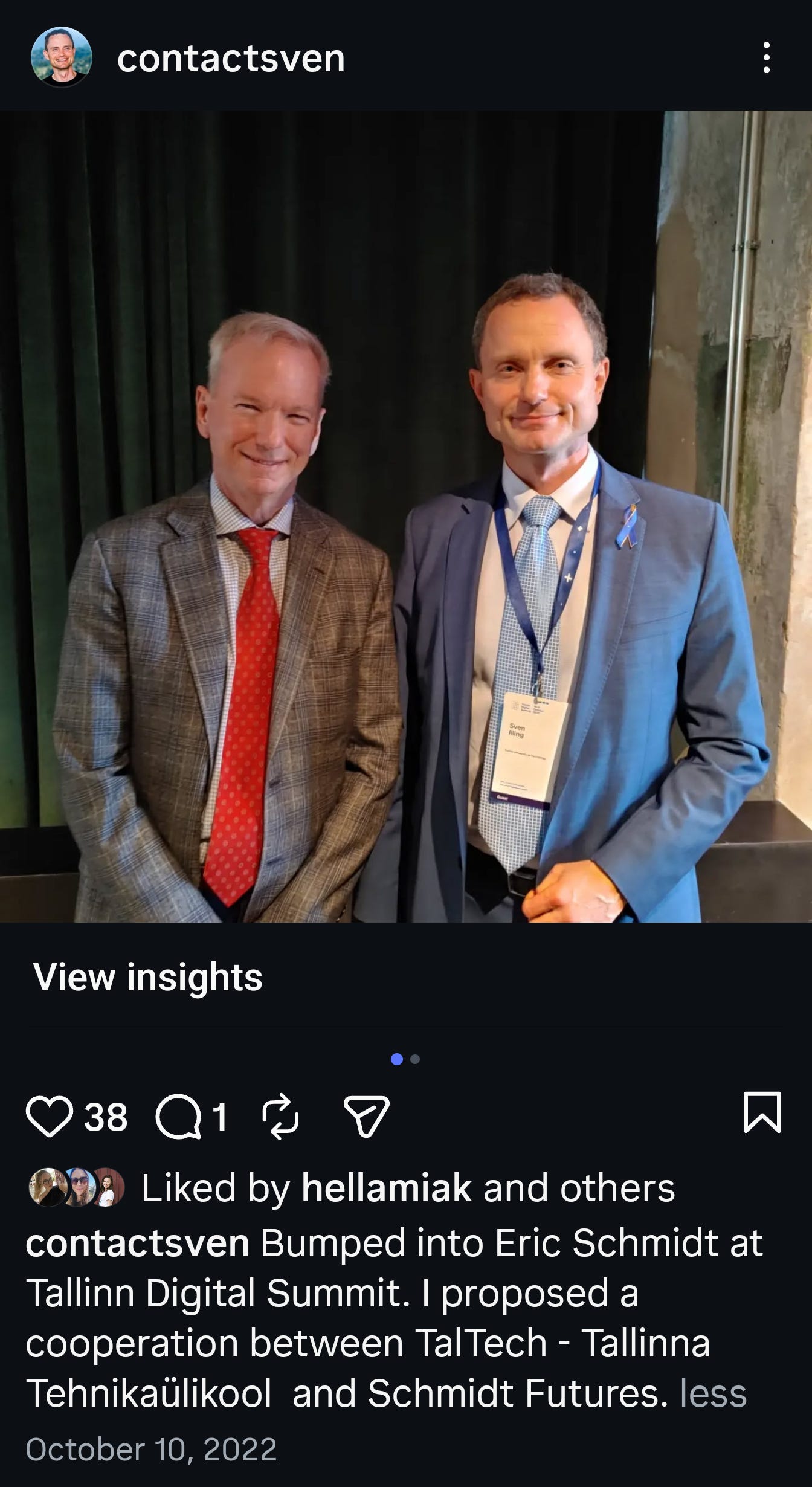
Example how I made a picture with Eric Schmidt and posted on Instagram.
Conclusion
Conference networking is about building a long-term web of trust.
In the next post, I will discuss the follow-up phase. I believe many people, including myself, could be so much better at following up and thus actually making an impact from meeting great people. Until next time, BE BOLD: show up, stay curious, and step outside your comfort zone.
All photos taken with my phone.
Great advice Sven, thank you for sharing it!
My advice regarding connecting on LinkedIn: when you are sending connection request after meeting them do add a note to the request thanking them for their time and mentioning where you met and what you talked about.
This note is technically an IM message in LinkedIn but it works a little weird - it will be logged in the chat only after they accept the invite. This could happen days, weeks or event months later. So this note should mention specific date or event where you met rather than a relative moment ("today", "yesterday", "this morning"). It's helpful both to them if they see your request later and to you too in future when you need to reconnect with them.
Writing this note takes a little effort but the personal touch and logging of the details of your first encounter will pay off in future.